MFA vs. NYC vs. DAY JOB

Image

I’ve hesitated to add my two cents to the MFA v. NYC…(er, debate? Is that what we’re calling it?) reignited by the publication of this anthology edited by Chad Harbach. I’ve hesitated because a) for a long time, I’ve been unsure that describing “two literary cultures” in America is useful at a time when new literature, it seems to me, has rarely been more diverse, genre-bending, and formally challenging, and b) I’m not sure whether I, as a poet, and therefore heir apparent to the tradition of being economically bound to the academy (HA HA) have a dog in a fight that claims to be about fiction writers, and finally c) I’ve been patently ignoring the discussion, because it makes me tired. But here we go.

Starting with 2009’s The Program Era, the large-scale discussion of the worth of an MFA, or its impact on the economics and aesthetics of the literary landscape, has focused on fiction. And not just Fiction writ large—which would have to include all kinds of storytelling, some of which, like comics, are just beginning to have a place in the academy—but namely novels and short stories. The justification for this, it seems, is that unlike poets, who have “traditionally” relied on the academy, not book sales, for their paychecks, fiction writers treating their publications like “credentials” rather than a way to buy groceries is sort of new.

“The NYC writer has to earn money by writing,” writes Harbach in the 2010 essay that kicked off this year’s anthology. Whereas the MFA writer earns money by teaching, making his writing, according to Harbach, strain or bloat with a lack of urgency or readability. Say what you want about that—anyone who reads feverishly knows that there are complex, timely, readable writers who teach in MFA programs just as there are duds who miss the mark. If the market “takes care” of crummy novelists in NYC (as it will, in time, take care of all of us, *evil laugh*), we can probably just let time take care of the fiction that comes out of creative writing departments, rather than being irritated that a more uneven array of it seems to be published each year.

But what about the writer who earns money a different way? Who waitresses, or teaches high school, or builds houses or iPhone apps. Who isn’t “immediately championed” by a university and perhaps never by New York critics, who doesn’t have teaching to lean on as a way to feel “professional” as a writer when her ideas dry up, and who also hasn’t made it in the “blockbuster-or-bust” world of New York publishing, threatened as it is by the looming specter of Amazon? Isn’t this a writer who, between the supply and demand problems of creative writing jobs and the frightened scurry of Random-Penguin-House, is destined to emerge as a “third culture” of American letters?

Does this writer—who could have, pre-program-era, been Muriel Rukeyser, or Amy Clampitt, or Richard Hugo—count in the MFA/ NYC tally? Does her slow, steady work in the hours when she comes home from the office or before she gets on the bus in the morning matter to the people who must divide America into literary Communism and capitalism? When I think of these writers, they are mostly poets: publishing in Poetry and The Missouri Review and Conjunctions, celebrating their new books after they sign out for the day or in between grading high school essays. If they are poets, they will always be more or less ignored by the market, and thus by the public. But it doesn’t make their innovations in language, in form, and in collaboration any less valuable. Think of Miranda Priestly’s speech in The Devil Wears Prada to a humbled Anne Hathaway–the art that everyone pretends not to care about, and that no one can afford to buy makes its way eventually into the clothes on your back. So, I hope, it is for America’s best poetry.

Some of these writers-with-day-jobs have MFAs, and some do not. Writers who manage to survive outside of both the New York-driven publishing world and the academic world are a special breed, and their work often—not always—reflects it. These are writers who may be more likely to work with artists from other disciplines, and to research and write on subjects that are new to them. They are documentary theater artists and documentary poets; they don’t shy away from performance; they write hybrid texts and libretti. They read everything they can get their hands on. They listen and watch. (Of course, I hasten to add, there are writers in both the NYC and MFA orbits who do these things too—that is the point, that a strong will and an imagination can always do something surprising to an institution.)

It’s possible that of this type of writer-with-day-job, many or most will remain unknown all their lives; some will eventually bemoan the loss of their chance to be the next Jonathan Safran Foer or to judge a contest or to have a stool named after them in Iowa City. But underneath their creative struggles and juggling of professional goals, these writers—those featured on this blog, and others—also comprise something surprising, something that in America we thought we had lost: a group of people who don’t just go to work every day, but who intentionally move in multiple spheres; who think, read, write, and live the liberal arts.
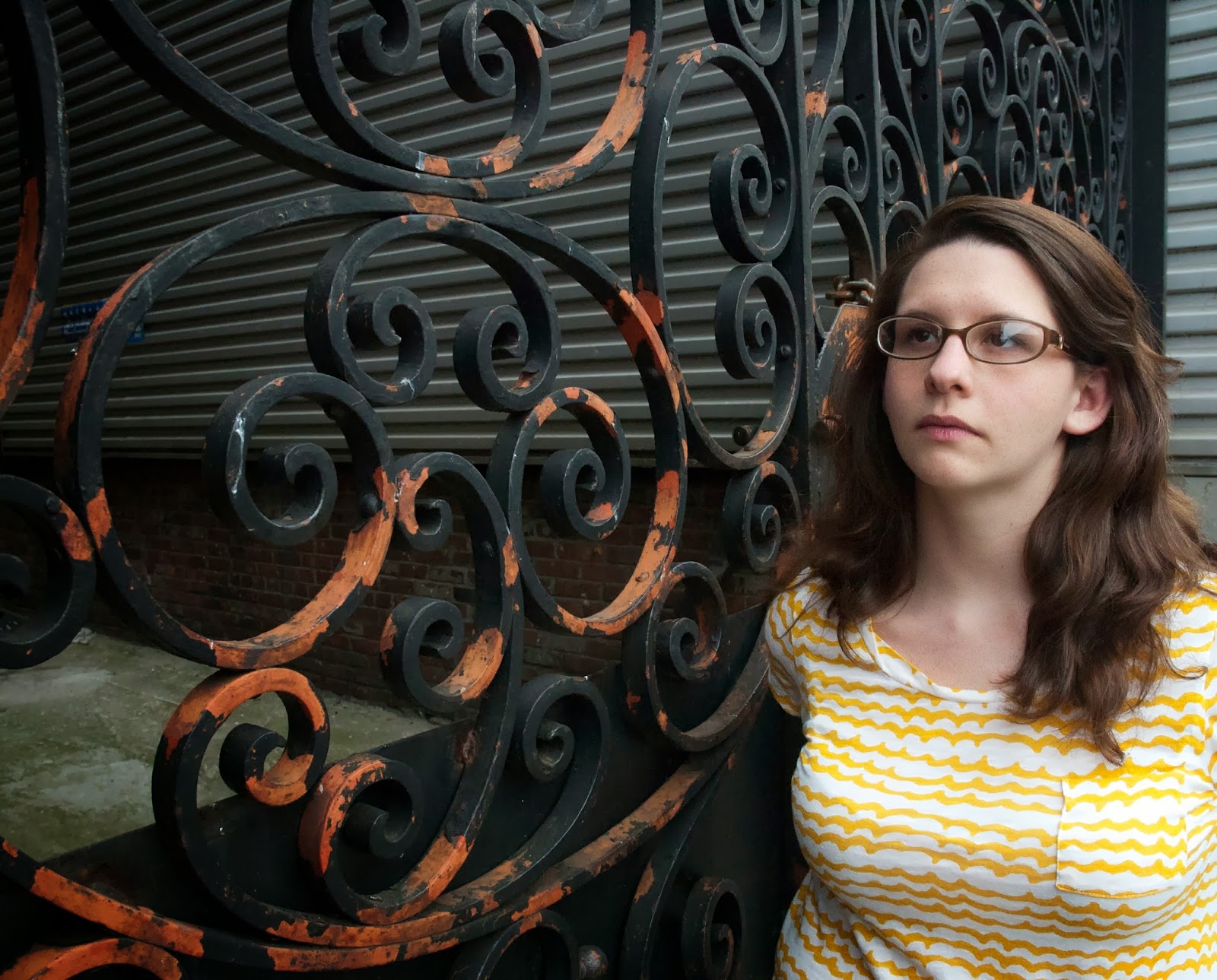

Business After All: An Interview with Kristin Maffei

DSC_5506

Why did you decide to get an MFA? 

When I first went to college, I remember meeting with my adviser and telling her immediately that my definite plan for after college was to get an MFA, so it’s always been in my consciousness somewhere.  But through college, I sort of backed away from the idea and thought maybe a PhD might be better suited for me. Either way, I’ve always loved school and learning, so I knew grad school was in my future, but it wasn’t until I’d worked for a few years that I realized that the MFA was really the right program for me. I wanted space to write creatively, and to be part of a community of writers, but not at the expense of time reading and analyzing other works.  Continue reading

Like An Overgrown English Garden: An Interview with Ester Bloom

Relax (1)

Tell me a little bit about the kinds of writing you do on a regular basis. 

Right now I’m responding to my agent’s edits on my novel manuscript, so that’s my main focus. I’m the new advice columnist (“Aunt Acid”) for Lilith Magazine, which is a hoot, and I write regularly for the Hairpin, mostly about literature from a feminist perspective. My latest “Read This with That” piece for the Toast is coming out soon, as is my first book review for the KGB Bar Literary Magazine. Is that it?

Somehow it always feels like I can and should be doing more. Like a weedy, overgrown English garden, my ambition will feed on anything and wants to go in all directions at once.

Continue reading

Still Outraged at 100: Muriel Rukeyser’s Centennial

Muriel Rukeyser has been dead for 33 years, but we just can’t keep away from her. On the occasion of her recent centennial, Chanel Dubofsky and I gave her a nickname and talked about the ways this incredible lady built essential bridges between art, activism, and work. 

Courtesy of the Paris Review.

Leah Falk: 

So–I guess I would like to start by asking you how you first came to/ heard about Muriel Rukeyser, or if we can give her a posthumous nickname, “The Ruk.”

Chanel Dubofsky: 

So I think I heard about, um, The Ruk in college. I was in this weird band of poetry people.

LF: The best band.

CD:  YES. Even though I’m not actually a poet, we needed each other. Anyway. Someone brought The Ruk to a gathering, and she immediately felt important to me.

Continue reading

I Left Nothing Behind: An Interview with Kerry James Evans

Image

Your first career was as a combat engineer for the National Guard. Can you describe your path toward poetry and deciding to get an MFA?

When I started out in college I was—like many young students—thrust into the world, autonomous for the first time, and without any idea how to manage it. I wasn’t performing particularly well in school, and, mostly, I felt without direction. During my sophomore year of college I was deployed to Fort Leonard Wood in Missouri to guard a gate for a year. I got up at 3 each morning, went to the armory, and then guarded the gate from 5am-1pm. After, I did physical training for two hours then attended night classes at the local university. I made up sleep on the weekends, when I wasn’t studying. I knew after, when I returned to Missouri State, that I wanted to write poetry seriously, and to do that I had a great deal to learn. I still do.

When you started the degree, what were you leaving behind?

I worked as an editor for a certain program within the Department of Justice. Before that I worked for two and a half years as an investigator for a law firm in Springfield, Mo. I also picked up part-time work in the university library—a job I secured only for the chance to read literary journals (they could not be checked out). In high school I worked at Little Caesar’s for almost three years while running both cross-country and track. In middle school and early high school—before I had a car—I hauled hay in Mississippi and landscaped for local businesses.

I left nothing behind. I have always enjoyed work, and when I started the MFA program the job may have changed, but my work ethic did not.

Your first book, Bangalore, deals quite a bit with your experience in the military. How do you think being part of academia (as an MFA and Ph.D. student and now as an adjunct instructor) has changed your recent writing—the process of it, its content, or both?

I’ll just say this: as I evolve, my poems evolve.

How long did you spend looking for work after the MFA?

I applied for Ph.D. programs during the third year of my MFA program. I was fortunate enough to be accepted to Florida State’s Ph.D. program, which offers a teaching assistantship and the opportunity to teach a variety of classes in addition to studying with excellent writers and scholars.

Do you envision staying in academe? What do you like about it, and what gives you pause?

I do. I like learning, and teaching is a great way to learn. I want my poems to continue to evolve, and teaching allows me to be around talented writers with new ideas and different experiences. I have learned as much if not more from my students and peers, as I have through my own research, which is invaluable to me as a poet.

Do you ever have any regrets about getting an MFA?

I have no regrets about earning an MFA. I had the opportunity to work with great poets who I respect and admire—both professors and colleagues. It is an experience that continues to inform how I approach poetry.

Do you think that more MFA programs should draw students’ attention to other career paths than university teaching? How could this be accomplished?

I think a great deal of programs provide alternative career paths to students. The MFA program I attended did a great job of exposing students to a variety of experiences, whether working for the literary journal or serving as an intern for the university press. We also created a visiting writers’ series as well as a writers’ festival, which taught us a lot of valuable skills about things outside teaching, i.e. fundraising, networking, and time management. The faculty hosted a professionalism seminar each year where they answered our questions and told us about the job search process. The same kinds of opportunities were presented in the Ph.D. program I attended.

Do you have any other words of advice for writers entering MFA programs from the workforce?

I think it’s good to set specific, manageable goals. I know many people who have published books while still in the MFA program, and that’s impressive, but I would say that is an exception to the rule. Publishing is important, but learning one’s craft is more valuable. I think the more focus that students put toward honing individual skills, the better chance their poems can be heard.

Kerry James Evans is the author of Bangalore (Copper Canyon). He holds a Ph.D in English from Florida State University and an MFA in Creative Writing from Southern Illinois University-Carbondale. He lives in Tallahassee, Florida.

Time Carved and Stolen: Curtis Smith on Writing and Work

IMG_0760 

For the past thirty-one years, I’ve worked with special learning students in a public high school in Pennsylvania. My day job precedes my first short story by six years and my MFA by over a dozen. My job has its rewards—and its frustrations and heartbreaks. Still, I don’t mind getting up every day and going to work, and in the end, I understand I can’t ask for much more. Writing has been the complement to my work, a place all my own, time carved and stolen from each day’s beginning and end, bookends of quiet and reflection in an otherwise hectic ride. Writing has given me the gift of engagement and creation—and sometimes, of sanity.

My late twenties found me in a good place. I’d landed my teaching job a month before my graduation, and after six years, I felt established, no longer the new guy. I was in love and recently married. Yet part of me was restless. Many of my friends were artists and musicians, and I yearned to be creative. I’d made a few 8mm films, and I’d refinished some old furniture procured from basements and auctions. I’d enjoyed these ventures, their hands-on processes, their tangible results. Yet I wanted something more. Or something different.

So I started writing. I had no English background; in fact, I’d always been more of a science-and-math person. In college, I’d struggled with my comp and lit classes. Why, I wondered, did Madame Bovary’s bouquet have to be anything more than a bunch of flowers? Part of my attraction to writing was due to stubbornness, one of my less admirable traits. Not being good—or at least passable—at something bothers me. Vain, I know, but I accept it as part of my makeup—and sometimes, the results of this shortcoming have left me a better person. Finishing in the stragglers’ pack of a seventh-grade race has led me to be a life-long runner. Madame Bovary’s wilted flowers goaded me to a second career of trying to explain my heart with pen and paper.

So I wrote. Every day, every evening. I read voraciously. I began submitting, and within a few years, I started to publish, not much but enough to earn my entry into Vermont College’s low-residency MFA program. I was fortunate—in Pennsylvania, school teachers needed at least 24 graduate credits to attain their permanent certification, and many districts, including mine, offered tuition reimbursements. Vermont was my first choice—I was already familiar with the work of a few of their teachers. I couldn’t attend the winter residencies, so it took me twice as long as most to graduate, but this turned into a blessing that allowed me to stretch my legs, to digest what I’d learned and use it to develop new material.

In the past few years, I’ve been invited to talk to students at different MFA programs. I tell them that my MFA studies were a valuable part of my maturation as an artist. I learned and read things I wouldn’t have discovered on my own. I developed friendships and connections I still cherish almost twenty years later. Most importantly, I came to understand that the people I met, all smart and motivated and creative, were also my competitors—and if I my work was going to find a place in the tight market of lit journals and small presses, then I needed to hold my writing to a higher standard. This scrutiny has become the most integral part of my writing routine, the continual asking if this story, this paragraph, this sentence is the best I can do.

Next year I’ll retire. I’ve had a good run with my crew, 33 years, and I’ve no doubt learned as much from them as they have from me. I’m already testing the waters of my next phase—I’ve been fortunate to have landed a number of visiting writer gigs at local colleges, and I’ve started some adjunct work, my MFA finally of use in an official manner to justify my employment. I don’t know what awaits—but I’m curious. And curious, I believe, is good.

Curtis Smith’s most recent books are Beasts and Men (stories, Press 53) and Witness (essays, Sunnyoutside). His next book will be a novel, Lovepain, from Aqueous Books

What a Difference a Day [Job] Makes: Some Notes and Reflections

Image

Cary Grant, ladies and gentlemen.

It’s been a little quiet around here lately. There’s a good reason for that, and no, it’s not because I poisoned some old gentlemen and hid them in the windowseat. Lo and behold,after a few months of asking people about their day jobs, I have one too.

Going forward, I’ll keep most of the details of my work life, like who I work for, names and projects, private. But I’d like to take a moment to think about how, in just a month of working a job—and yep, outside academe—my ideals and daily practices have changed.

1. Part-time is a state of mind.

My job, for the time being, is only two days a week. My twenty-two year-old self might have resented a less than full-time gig and clocked in and out accordingly. But I like this job, and eventually I’d like it to be possible for someone to consider hiring me full-time, or even just for more weekly hours. So the time and energy I put in tend to expand—as they do when I sit down to play with a manuscript, or as they did when I dreamed up lesson plans. I have to hold little tribunals with myself about how often it’s okay to check work email on my days off. But I’m certainly not all virtue. The tribunals (made up of my regular self, a version of me with sunglasses and no pants, and a medieval rabbi version of me—what would Freud say) extend to whether it’s really okay to wait until Tuesday to start thinking about that urgent thing that’s due the week after. Does this eat into my writing time? Maybe. Does it also make me feel pretty useful and stave off depression? Probably.

2. Good ideas and smart people are everywhere.

I’ve been lucky enough in my life to have experienced several situations where I felt almost spoiled by the talent, goodness, and passion of the people around me. I felt this way as a high school student spending a summer at the Pennsylvania Governor’s School for the Arts (now on long hiatus), a number of times in college, and in graduate school. In these situations, brilliantly engineered by admissions counselors and teachers, people spontaneously created theater projects together, had three-hour dinner conversations with folks they had met that afternoon, and traded work they’d never shown to anyone else.

I don’t think it’s an accident that I got to experience this kind of atmosphere multiple times—in fact, I know that I sought to reproduce it in my life again and again. So why should I—why should anyone—expect that just because they’ve left “the bubble” of a great MFA program or community of writers, they can’t find another place where people care about ideas, good conversation, and working on projects whose outcomes they wholly support? My workplace now, I’m happy to say, is full of people who would happily interrupt their data-entry to discuss the work of a 20th century Lithuanian poet, and who listen carefully when someone else has an idea. There’s some luck involved in finding that kind of place, I admit; but it can also be something you actively seek out or even carry around with you.

3.  Dust and ashes.

Let me get a little existential here. Like many people I’ve interviewed on this site, I do a lot of writing, editing, and submitting when I can. Nothing much about the way I do that has changed, except that there’s a sense of both urgency and ordinariness to it now—I don’t feel lifted up, promised, the way I did as an MFA student and post-MFA fellow. Writing is something I wake up and do, like going for a run or making coffee or getting on the train to go to work. But where as a student—and even as a younger person with other day jobs—I felt like I had all the time in the world, I usually feel that writing must be done now. There might not be time later, and later my head might be full of something else. I move through the usual good and bad writing feelings (usually: somebody likes me/ nobody likes me/ I am created in the image of the Lord/ I am but dust and ashes), and I try to recognize that whole range of feelings as a possible daily range. Anger is not just for special occasions, and neither is pride.

*

As I continue to “live” this blog–as an MFA with a day job–on a daily basis, I’d also like to hear from you guys: have you taken a job (or two or three) recently, and have you witnessed a shift in your priorities or practices? Positive, negative, or in between, write about it and send it this way, sil vous plait.


Ph.D. Day Job–Part the Second

“Dr. Rogers suggests that alt-ac is less a matter of where you work than how — ‘with the same intellectual curiosity that fueled the desire to go to graduate school in the first place, and applying the same kinds of skills, such as close reading, historical inquiry or written argumentation, to the tasks at hand.’”

Over at The New York Timeswe get a reminder–did we need one?–that higher ed of all kinds is a means, not an end. All for starting an alt-ac MFA support group on the eastern seaboard, say aye (you’re welcome to do your party-planning in the comments). 


In Thirty Seconds Or Less: An Interview with Hieu Huynh

Hieu profile pic

Hieu Huynh is a writer/producer with CNN’s On-Air promotion department based in Atlanta, GA. She is enrolled in NYU’s inaugural low-residency MFA program with workshops in Paris. When she’s not writing poetry, she’s eating her way around the world.

You’re currently a writer-producer at CNN. Tell me a little bit about what that work is like on a daily basis. 

Every day is different and that is exactly what I love about working at CNN. I love knowing that what I do makes an impact and that my work can be seen all over the world. Today, I may be writing about the aftermath of the government shutdown; the next day, I could be writing about a national tragedy…all in thirty seconds or less.

Continue reading