This Week, Kicking off a Writer-Activist Feature

Hi everyone.

This blog strives to serve as a place for writers with day jobs to reflect on the balance between the work that earns them their living and the work that sustains their humanity, and the happy intersections between those types of work, whether they happen frequently or rarely. For every working person, work is to some extent caught up with his or her humanity: feeling useful, using one’s talents and skills, and supporting oneself or one’s family are all ways we continue to feel alive, necessary.

But for writers, work and humanity are particularly inextricable from each other: in our best writing, our job is to be brutally honest about what it means to be human, even if that means acknowledging the most painful, contradictory aspects of human behavior. To me, this also means that writers have an extra responsibility to pay attention to injustice—as Muriel Rukeyser put it, “If you refuse,/ wishing to be invisible, you choose/ Death of the spirit, the stone insanity.”

With that in mind, and as the sole person running this blog, I can’t pretend to any policy of political neutrality. In the perplexing and disturbing wake of George Zimmerman’s acquittal and in memory of Trayvon Martin and other victims like him, I feel compelled to return my attention to those writers—like Gwendolyn Brooks, Audre Lorde, Muriel Rukeyser, Adrienne Rich—whose day job was activism, and for whom writing and activism were in fact joined at the hip.

On this blog, I’ll feature activist writers, living or dead, starting this week—if you know of a living writer who would like to be interviewed, or if you’d like to recommend that I profile a famous writer-activist who’s no longer living, send their names my way.

Call for Submissions: Poems about Debt

Bartender cut you off again? Wake up to find the bill collector at the edge of the bed? IRS in your kitchen, eating the last of your Fage?

Drunken Boat is seeking “poems that engage with debt: the friction between desire and limits, the intersection of ownership and obligation.” We know something about THAT.

Submit here.

Here, I’ve Been Named the Head of a Student Dope Ring: Richard Hugo on Day Jobs

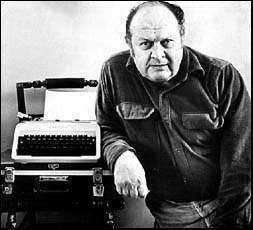
RichardHugo

If you are a poet (or a fiction writer) with a day job, rush right out and read Richard Hugo’s essay “How Poets Make a Living,” in his celebrated collection The Triggering Town. The question of how it feels for a poet to work outside academia was one that Hugo, who worked for thirteen years at Boeing, dreaded. Did it matter what one did between the hours of 9 and 5? In “the real world”? “I hate that phrase ‘the real world,'” Hugo wrote. “Why is an aircraft factory more real than a university? Is it?”

Gems from “How Poets Make a Living” include Hugo’s discovery of a 1949 volume titled Advice to a Young Poet. Poets, according to one Llewelyn Powys, should “wash your underclothes with your own hand as though this extra persona fastidiousness were part of a religious rite…Aim at getting up half an hour earlier than other people and walking if possible to catch a glimpse of the sea every morning.” If Powys lived today, it sounds like he might join forces with Gwyneth Paltrow.

Hugo finds all these romantic prescriptions absurd. His own comparisons between the business and academic worlds are level-headed, selfless and hilarious:

“There [business]: 62,000 employees and no one cares that I write poems.

Here [academia]: When I first start, twenty-six employees in the department and three of them hate me because I write poems.

There: Those who know I write poems don’t seem to assume anything is special about me.

Here: I’ve been named the head of a student dope ring. A student informant tells the administration I’ve advised students to print and distribute copies of a ‘dirty poem’ about the campus. I am a homosexual. I am a merciless womanizer. I throw wild parties. I write my poems in Italian and then translate them into English. I come to class dressed in dirty, torn T-shirts. I am a liberal, a reactionary, a communist, a Nazi.”

Hugo gives the caveat: “I’m apt to sound too self-assured about the unimportance of a poet’s job because no matter what I’ve done for a living I’ve gone on writing, and because with one exception I’ve never found the initiating subject of a poem where I worked.”


Go, Go, Gadget Litmag: An Interview with Adam Lefton

adam lefton

Adam Lefton is a writer and editor living in Austin, TX. His work has appeared in Water~Stone ReviewWashington Square Review, and McSweeney’s Internet Tendency. In 2012, he co-founded LitRagger, the world’s first iPad application exclusively built for reading literary journals.

Why did you decide to pursue an MFA?

As a teenager, I wanted to be a screenwriter, but at Dickinson College the amazing Susan Perabo introduced me to writing fiction and I never turned back. When I graduated from Dickinson, I knew about this thing called an MFA, but Susan had—wisely—advised me to hold off on applying until I felt like I could absolutely do nothing else but devote two or three years to my writing. It was great advice. I worked in publishing for three invaluable years, and then I began to feel that itch. I’d been writing, but I wanted more time to give to my work. I wanted to return to an academic environment, to workshop. So I sent out a big pile of applications and was fortunate enough to be offered a spot in the program at Purdue University.

When you started the degree, what were you leaving behind?

Unfortunately, I was next in line to run Farrar Straus and Giroux.
But, actually, no. I left nothing behind. Some people might remember Black December and what happened in publishing after the financial crisis began in 2008. Lots of people lost their jobs, and I was one of them. Fortunately, I had already been planning on leaving to get my MFA, though there were a few tense weeks there after I lost my job when I still hadn’t been accepted anywhere.

When you started your program, what did you envision happening afterward?

Working in publishing substantially lowers your expectations as a writer. I think it’s probably made a number of my friends quit writing completely, though I doubt they’d admit as much. I don’t know if I really had a clear vision for what would happen after my MFA. I’d read thousands of query letters highlighting accomplishments exactly like the ones I hoped to soon have, and these books weren’t getting published. So I didn’t expect much–just a few publications. That’s it. I wanted to be a few steps further ahead with my writing than I had been when I started.

Don’t get me wrong. I didn’t think an MFA would automatically result in publication, as though it were some badge that made my work publishable. But I felt that immediately prior to entering the program I was on the cusp of breaking that threshold, and that the freedom to commit myself to crafting better stories would push me over the hump.

Since leaving Purdue, you’ve developed an app for people to read literary journals on their electronic devices. Where did the germ of that idea come from, and how did you develop it?

I was the Managing Editor of Sycamore Review at Purdue, and I spent a lot of time researching digital publishing methods for the journal. There were so many obstacles. The technology was too complicated, the cost too high. I started to wonder if maybe the best solution was one that didn’t exist yet, and then I wondered it out loud to the right person (which leads nicely to your next question).

Do you have a background in tech? If not, how did you become acquainted with the skills you needed to move this project forward?

LitRagger is a two person team. I’m incredibly lucky to have Landon Sandy as a partner and master of all things tech. The application would not exist if not for his incredible dedication. Landon is married to a friend of mine from workshop at Purdue. That’s how we met.

Would you say that there were concrete elements of your MFA that pointed you in the direction of this project, or was it a complete divergence?

Oh, absolutely. LitRagger would not exist otherwise. The people I met during my three years at Purdue were a huge asset during development. Many of the journals we launched with—HOBART, Gulf Coast, Prairie Schooner, etc–were involved in the process because I had ongoing relationships with their editors. More so, though, being at Sycamore Review for three years forced me to rethink journal publishing. I had been staunchly print when I arrived at Purdue. In fact, like many writer/editors I wanted to start my own print journal one day. But seeing how much amazing work was already being published in the journals I admired, and how little these journals were bought and read relative to the high numbers of people who sought publication in them, shifted my perspective. A lot. I began to feel like a new way of distributing work could be a much more significant contribution to the community than another journal. It could change, for the better, how we enjoy the work, making it more accessible, shareable, and interactive.

I don’t think we’re quite there yet with LitRagger. We are working on integrating social media so that readers can make recommendations through the app, much like you would in a program like Spotify, and will probably launch this feature in the Fall. Just imagine how much more likely people are to read a certain piece when they see on Facebook that it has been “liked” by a bunch of their friends.
The goal is to create a space for conversation about contemporary prose and poetry that is both a forum for debate and a catalyst for organic, social media driven publicity. That’s something I feel is severely lacking for literature, especially given how much technology has revolutionized other arts. So often, the work just sits there, nicely bound and printed, and even if people read it no one ever responds.

There’s a lot of work still left to do to achieve this, but I think the foundation is there, and we are growing.

What does a typical workday look like for you?

As you might guess, I do not work on LitRagger full time (it just wouldn’t pay the bills), and I’ve had a few other jobs since finishing my MFA. My typical LitRagger work day is a weekend, usually Saturday. I’ll hunker down at a coffee shop. I do a lot of the work at night too. Basically, between writing, various jobs, and LitRagger, I am a 7 day a week worker.

Do you like the work you do? Why or why not?

I love it. I mean, the grueling schedule can wear on me sometimes, but I am very passionate about this project. Plus, it’s kept me involved in a community that is sometimes difficult to stay in touch with once you’ve finished your MFA.

Are you writing these days? Publishing?

I knew this question was coming. The answer is yes, though not as much as I would like to be, and without the same kind of focused direction I had during my MFA, which feels at once liberating and distracting. I send out work less because I feel less pressure to get published. During the MFA, it’s pretty easy to get caught up in the excitement of submitting your work and the success of acceptance for yourself and your peers. I’ve pretty much reverted back to my pre-MFA approach to submitting work: only when I’m absolutely certain it’s ready and that I want this work to be mine.

Do you feel that you’ve been able to structure your time to privilege your writing? How do you do that?

It’s much harder. I don’t sleep much.

Did you have the opportunity to work in academia after you graduated? How did you respond to that opportunity?

Not in any significant way. I was offered a class at Purdue for the fall semester, but by the time they’d made that offer I had already decided to move to Austin and focus on LitRagger.

Do you ever have any regrets about getting an MFA?

Not living off the stipend Purdue gave me. The program is very generous, one of the most well-funded in the country. But one of the drawbacks of three years in the professional world is that you become accustomed to a certain lifestyle. According to some financial records at various institutions that I won’t name, I borrowed money in order to maintain that lifestyle while getting my MFA, and despite numerous hoaxes and spells they continue to demand—via antiquated snail mail—that I return it.

Do you have any other words of advice for recent or soon-to-be graduates of MFA programs? For writers just entering those programs?

My first reaction to this question was: no one should be taking advice from me.
Just remember that pretty much every road after your MFA ends is going to be bumpy, so you might as well pick the one most interesting to you.

A Reminder: Send Your Favorite Writer Farmers, Techies, Teachers, Lawyers, Sanitation Workers, and Nurses Here!

Just a reminder that MFA Day Job is still accepting queries from people who’d like to be interviewed for the site! If you are a writer with an MFA who works outside of academia (that means you don’t rely solely on a university for your income) please email me at leahfalk@zoho.com.

I’m particularly interested in featuring writers who

a) are male (we’ve had a lot of wonderful women on the site so far, but men, I know you’re out there)
b) don’t reside in cities
c) are farmers, artisans, construction workers, sanitation workers, community organizers, in law enforcement, in the military, or in the retail or hospitality industries
d) (but still contact me if you are also a teacher, lawyer, doctor, business person, nonprofit professional, copywriter, engineer or industry scientist)
e) want to discuss the ramifications of MFA debt

Tell your friends!

Creative Writing and the Humanities of the Future


Just because MFA Day Job wants to highlight writers who work outside of academia doesn’t mean that the academy isn’t in our peripheral vision. A recent Harvard University report, as summarized by The Chronicle of Higher Education, weighs in on the declining numbers of humanities majors in universities, and what humanists might do to improve those numbers. Among the recommendations: don’t avoid conversations about employment with humanities students, and refocus classes on student skills rather than on getting through a falsely exhaustive canon of works. As a former undergraduate who would have been happy to major in 19th century novels and popcorn (both for their own sake), I’m still happy to see the report supporting the educational philosophy that made this website seem like a good idea:

The report rightly rejects the claim that the humanities are worth studying for their own sake, with no regard for vocational opportunities. It is indeed disconcerting when tenured faculty members, enjoying a job security found nowhere else in the work force, urge students, undergraduate or graduate, not to worry about finding employment. The point is not to turn humanities education into a vocational-training program but to recognize that the competencies acquired in the study of the humanities are transferable to a wide range of careers. Humanists should embrace that argument.

Continue reading

Writing for Money, Writing for No Money

2162723195_e81c4029c3

As I write this post, I am supposed to be writing something else. I have been struggling to finish the “something else” for four days. It’s a short piece, something I know I’m capable of running off in a few hours. But instead I have swept the kitchen floor, finished a jar of jam, walked to CVS, called my parents, opened another jar of jam. This should be a familiar situation to anyone who has ever procrastinated doing anything.

But there’s another distinction between the writing I’m doing on this website and the writing I’m supposed to be doing: for writing the thing I’ve been putting off, I will eventually get paid. Not a lot, but more than zero dollars. And I wonder if that is part of the reason writing it has been like pulling teeth.

Technical writers, business writers, and grant writers take it for granted that their work will be paid, that writing is a skill that has monetary value. Poets and fiction writers, on the other hand, even as they begin to publish in good places, can never quite assume that a check will be in the mail. Especially now, some of the most interesting online places – where your work is perhaps more likely to be read by all your friends than in even the best print journal – don’t pay. What difference does this make to our writing, and how we think of it as work?

“I’m working,” or “I have to get back to work,” you have probably gchatted to someone who has interrupted your morning writing time (and what were you doing with that window open, huh?) and subsequently you might have felt a little dishonest as you glanced at your messy Word document and then clicked on “Can Men Breast Feed?” Calling our creative efforts work can be, variously, a way to impress our non-writer friends, a way to legitimize ourselves to ourselves, a way to apologize to the rest of the world for the fact that we actually kind of enjoy what we do, and many other things. But no matter what the word does for us, we probably have fewer doubts about it when it comes attached to some USD.

For most poets and fiction writers, of course, any money that elevates our work for the rest of the world probably comes after years of unpaid toil, if at all. There’s something freeing as well as frustrating in that fact – even if your mother gives you a side-eye when you disappear from a family gathering in order “to get some work done,” and even if a family friend sends you a congratulatory postcard upon hearing you have “sold a poem” (it happened to me), it’s nice to know that in the meantime, you can experiment, you can mess up, and you can take as long as you want.

But that’s just me, a worried person who hates to pull all-nighters. Is your writing work? Does your answer change based on whether you’ve been paid lately? What do you say when someone asks you what you “do”?

Anatomy of a Writer: An Interview with Christine Montross

Christine Montross is the author of Body of Work and Falling into the Fire, due out August 1st from Penguin Press. She holds an MFA from the University of Michigan.
Why did you decide to pursue an MFA?

I loved reading and writing poetry, and I wanted to seriously commit to learning more about the craft of poetry.

When you started the degree, what were you leaving behind?

I had also applied to and been accepted to several law schools, but when I received my acceptance letter to Michigan’s MFA program I burst into tears. I knew then that the MFA was the route I really wanted and had been hoping for.

Continue reading

What We Talk About When We Talk About MFA Debt: An Interview with Jamie Agnello

jamie

Jamie Agnello is a poet and theater artist living in New York City. 

You are somewhat unique among MFAers because you hold two MFAs, one in poetry and one in theater, which you earned concurrently. Before we get into a discussion of the financial aspects of getting these degrees, tell me a little bit about how you decided to combine these fields.

I originally started at Sarah Lawrence in the fall of 2009 as an MFA poetry candidate. Since I’ve always been very active in both fields, I had asked during my application process if it was possible to be a member of the campus theater community even if I wasn’t officially part of the program. Everyone that I had spoken with was extremely encouraging, so that was pretty thrilling for me. Through some friends, I ended up meeting with a director in the theater program (Dan Hurlin) who needed some more cast members for his upcoming show. I ended up joining the cast, as well as taking some theater courses for my first year electives in the poetry program. Halfway through the semester, I decided that I wanted to audition for the theater program as well. After many meetings with advisors and the dean and financial aid, it was approved. I ended up being the first student to graduate with MFAs concurrently. The programs remained separate, so I hold an MFA in each.

What does your creative work situation look like now that you’ve graduated? Are you doing more of writing or theater?

I was just remarking about how absolutely thrilled I am about my creative work situation these days. I’m definitely doing much more theater than writing, but my poetry has definitely become a larger part of my theater work. I have worked as a non-traditional dramaturg/script editor, where I adapt found text (existing story, writings from the cast, my own writing) and compile it into a “script” in collaboration with the director and the cast. I love that. I’m also creating a poetic/highly image-based short film/solo piece based on the life of Rosemary Kennedy, where I really feel like my work with poetry has greatly informed the structure of the product.

As far as theater goes, I recently finished up a new show for 2-5 year olds called Off the Map (about the NYC subway system, devised in collaboration with Trusty Sidekick Theater Company and the preschoolers of the University Settlement on NYC’s Lower East Side). I’m working as a puppeteer for a piece entitled Chimpanzee as part of the St. Ann’s Warehouse Labapalooza! Festival this weekend, and also gearing up for a residency at the Park Avenue Armory with Trusty Sidekick Theater Company this summer/fall for a new immersive theater piece for young audiences.

How do you support yourself?

For the past year, I’ve been working as a server in a lovely restaurant in the East Village called Calliope.

Do you like your job(s)? Why or why not?

I was particularly lucky to work in a restaurant that I wholeheartedly believed in. I feel like this is a rarity, especially in New York, where there’s a new place opening every day. Calliope is co-owned by a husband and wife, who are also the co-chefs, who have taught me more about rustic French cooking and incredible wine than I ever thought I’d know.

I’m currently applying for more permanent jobs in the arts, as the theater work I’m getting now isn’t paying quite enough for the likes of living in New York City.

How did the financial assistance and/ or debt associated with your degree program impact the work you chose to do immediately after graduation? How about a year on?

My debt is large, but there’s something comforting in knowing that I’m not the only one…? I guess? There’s a lot of people from Sarah Lawrence who are also living and working in NYC, so we look out for each other. I don’t have the luxury of being a theater artist without a day job with the amount of debt that I have, but I don’t feel burdened by it…all the time. It’s scary, sure, but I really try not to let it rule my life. I’m on an income-based repayment plan, which is working very well for me so far. I plan to continue with it for as long as I can.

How up front with you and your cohort was the program about the difficulties of carrying debt for a fine arts degree (or two?)

I feel like they were clear, but I do know lots of people who would disagree. Since I was doing two programs, I had many, many meetings with financial aid to work out all my details, which then, in turn, helped me to become very informed about my loans and debt. I did not have to pay full price for the two degrees, which made it possible for me to do it. I also worked for Sarah Lawrence as a Graduate Hall Director, so I had my housing covered by my job, since I lived on campus. I made my small stipend work for me and did not take out any loans to cover anything but tuition. I feel that the living expense loans that students end up taking are the most intense when it comes to repayment after graduation. They may seem like a good idea at the time, but I would recommend looking into working for the school in a residential life capacity or working during your time in your program to offset some costs.

If the program discussed finances with you and your peers, how accurate were they, in terms of the situation you find yourself in now? What could they have warned you more about or not discussed so gravely?

Since my situation required so many meetings to work out, I felt very informed. I’m not surprised by my current financial situation. I encourage others to talk with your financial aid office. They are helpful. They want you to be aware and to be able to be in control once you graduate.

Do you ever have any regrets about getting an MFA, related to debt or not?

Absolutely no regrets. I am working on writing and theater projects that I could have never predicted happening for me. Sarah Lawrence opened my artistic boundaries so widely and so completely that I feel nothing but thankful for my time there.

What advice would you give writers who are thinking about getting an MFA, in the process of getting one right now, or about to graduate?

I’d definitely say to take some time in between undergrad and grad. It was something I wasn’t planning on doing, but then once I did, I was so thankful for it. Be sure that graduate school is what you want. It’s easy to see yourself continuing on with school when that’s all you’ve been doing up until this point in your life. Take time. Breathe. Travel if you can. Spend some time with your family and friends. Work a job you hate. Live somewhere you’ve always wanted to. LIVE. Graduate school is intense. Be ready to throw yourself into it. It’s only 2 or 3 years, so be sure to make them count.

What advice would you give to writers choosing between going into debt for an MFA and not getting the degree at all?

Just be sure that an MFA is what you want, that you’re ready for it. It’s going to be a lot of debt, unless you’re one of the few who are admitted into a fully funded program. The debt is not crippling for me because I’m living a very artist-based lifestyle. Marriage is not on my radar right now, neither is buying a house or having children…If those are things that are important to you and you want them to happen in the near future, just plan for that. Take time to make the decision and seek out how to support yourself while you’re in school so it becomes less overwhelming upon graduation.

Check out Jamie’s Chuck Bass poems and other writing at jamieagnello.tumblr.com. 

Rattle’s Tribute Calls for Poets Who Also ________

I’m a big fan of Rattle, a journal that keeps poetry populist by inviting readers to vote on who should receive their annual poetry prize. One of my favorite things about this magazine, though, is their frequent “tributes” to poems of a certain kind, or to poets who have something else going on in their lives, including their day jobs: they’ve had tributes to nurses, lawyers, grade school teachers, soldiers, and editors. Coming up in Fall 2013, they’re running an issue partly devoted to the work of/ about single parents–a day job, of course, all its own.

Alas, the call for the single parents tribute has passed, but if you’re someone who, like good old Lawrence Joseph, wants to remind people that the writer they’re reading has another life that sometimes slips into the work, keep Rattle in mind for your next round of submissions.